| |
|
6. BALAPITIYA |
|
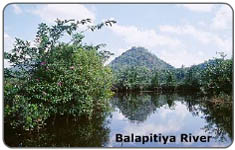
Just a 25 minute
drive from Bentota, one can see the famous Maadu River which is
famous for Boat Trips, which could be done for a period of about
1 1/2 hours. The Maadu River is also famous for its 64 large
islands which range from about 150-200 acres, namely some of
these islands are; MADDUWA, KOTHDUWA, SATHAPAHA DUWA & GINDUWA.
Most of the islands are inhabited. During the boat trip you
could also witness the art of prawn capturing and also Fishing
done by the villages that live on some of the islands. Apart
from this there are some famous islands which visitors use for
Champagne, B'fast and Barbecue Lunches. |
|
7. MEETIYAGODA |
|
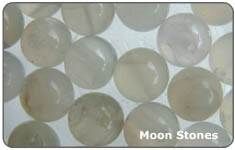
Meetiyagoda
village, 15-km inland, has moonstone mining. The clear or
slightly milky which in color, the moonstone is not considered a
precious gem is polished and set in silver or gold jewellery.
The road sign claims that it is the "only nature moonstone
mining in the world" |
|
8. AMBALANGODA |
|
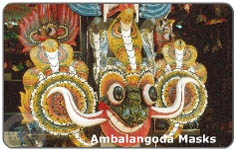
Ambalangoda
along the coast road, is the team of Devil Dancing, Mask making
which may families have carried out for generations. It may be
possible to watch a performance of folk theatre (Kolanm) asks
locally. Ambalangoda is also famous as a major centre for
cinnamon cultivation & production. Batik Factory for colorful
dramatic fabrics, designer garments, accessories and decor items
in a way resist dyeing technique of Indonesian origin but
distinctly Sri Lankan design and the colorful fish market is
worth visiting early in the morning. |
|
9. Mask Museum |
|
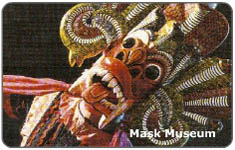
Mask Museum is
primarily a workshop & showroom. Some of exhibits tracing the
tradition of mask dancing are interesting and informative.
Traditional masks worn for dancing, using vegetable colors
instead of the brighter chemical paints, masks sell from around
Rs.500.00 to served thousand rupees. Traditional masks are more
expensive. Antique shops often sell newly crafted items which
have been "aged". It is illegal to take out any article over 50
years old without a government permit. |
|
10. Galle |
|
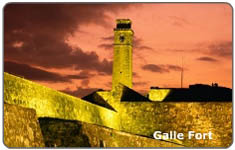
The port of
Galle, thought by some to be the Biblical city of Tarshish,
splendidly illustrates the solidity of the Dutch presence in Sri
Lanka. The 36-hectare (89 acre) Dutch Fort, built in 1663, has
withstood the ravages of time. Its massive ramparts surround the
promontory that forms the older part of Galle, and shelters
within its walls sturdy Dutch houses, museums and churches. This
area has a quiet, relaxed atmosphere that seems almost detached
from the flow of history. The New Oriental Hotel, built for
Dutch governors in 1684, is a colonial gem with a wonderfully
atmospheric bar. Nearby is a tiny sliver of a beach suitable for
a dip, though most travelers prefer to head along the coast to
the fine beaches at Unuwatuna, Weligama and Tangalla. |
|
11. Hikkaduwa |
|
Hikkaduwa is the
island's most developed beach resort, though it's looking rather
forlorn these days. It has a range of accommodation, good
restaurants and pleasant cafe-lined beaches. There's good
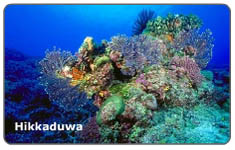
snorkeling at an attractive and easily accessible coral
sanctuary, scuba diving at a number of wrecks in the bay, tours
by glass-bottomed boats and pretty good surfing. It's a relaxed
place, similar to many Asian beach resorts popular with Western
travelers. There are also plenty of handicraft shops catering to
tourist whims, a Buddhist temple, a nearby lake with abundant
birdlife and some pretty dangerous traffic hurtling down the
main road.
Even if you're not a scuba
diver, Hikkaduwa offers underwater delights. Only 200m Offshore,
in shallow water no more than 4m (13 ft.) deep, a reef protects
an expanse Of brilliant coral populated by vividly colorful reef
fish and even the occasional Turtle. It is perfect snorkeling
territory, but for the less confident, glass bottomed boats also
operate from the beach. |
|
|